6-Axis Accelerometer (MPU6050)
Introduction
The MPU6050 is a high-performance 6-axis (3-axis accelerometer + 3-axis gyroscope) sensor module used for measuring an object's motion attitude. It uses an I2C interface and is commonly used in quadcopter flight controllers, self-balancing vehicles, and similar applications.
Objective
Program measurement of MPU6050 acceleration, angular velocity, and temperature values using Python.
Experiment Explanation
Most MPU6050 modules on the market are generic and use I2C bus communication. Below is an MPU6050 sensor module:
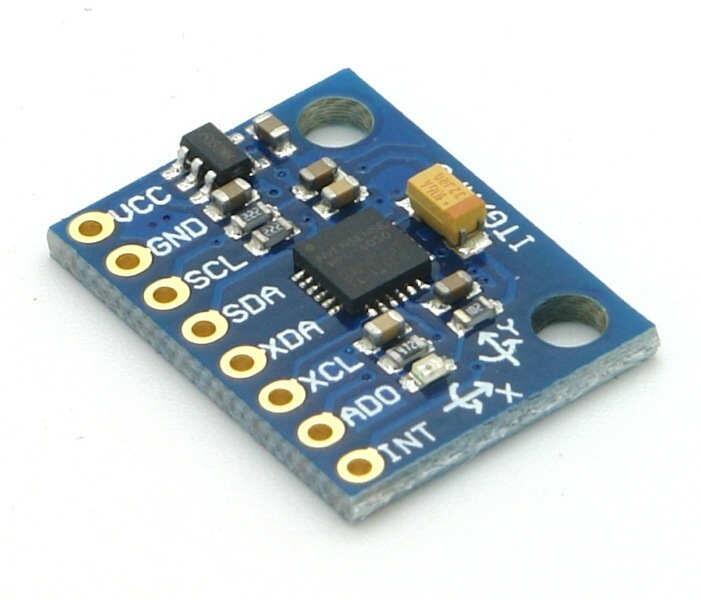
| Module Specifications | |
|---|---|
| Supply Voltage | 3.3V |
| Communication | I2C bus (default address: 0x68) |
| Measurement Dimensions | Accelerometer: 3-axis Gyroscope: 3-axis |
| Accelerometer Range | ±2/±4/±8/±16g |
| Gyroscope Range | ±250/±500/±1000/±2000°/s |
| Temperature Sensor | Measurement range: -40℃~85℃ (precision: ±1℃) |
| Pin Description | VCC: Connect to 3.3V GND: Ground SDA: I2C data pin SCL: I2C clock pin |
MPU6050 6-Axis Direction Description:
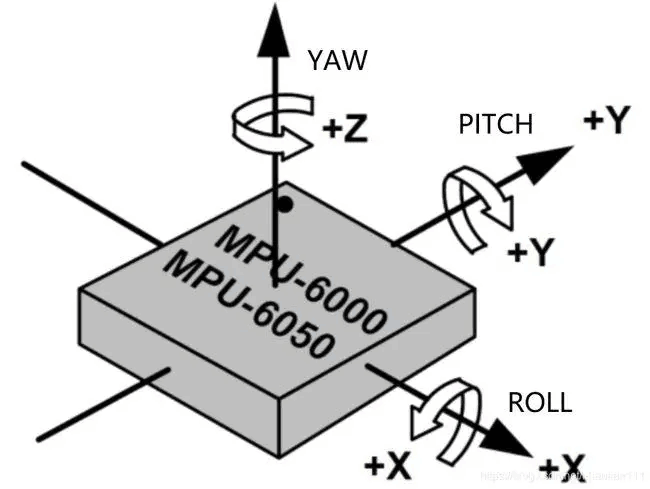
From the above, we can see that the MPU6050 is a sensor driven via the I2C interface. We can program the WalnutPi PicoW's I2C interface to communicate with this module.
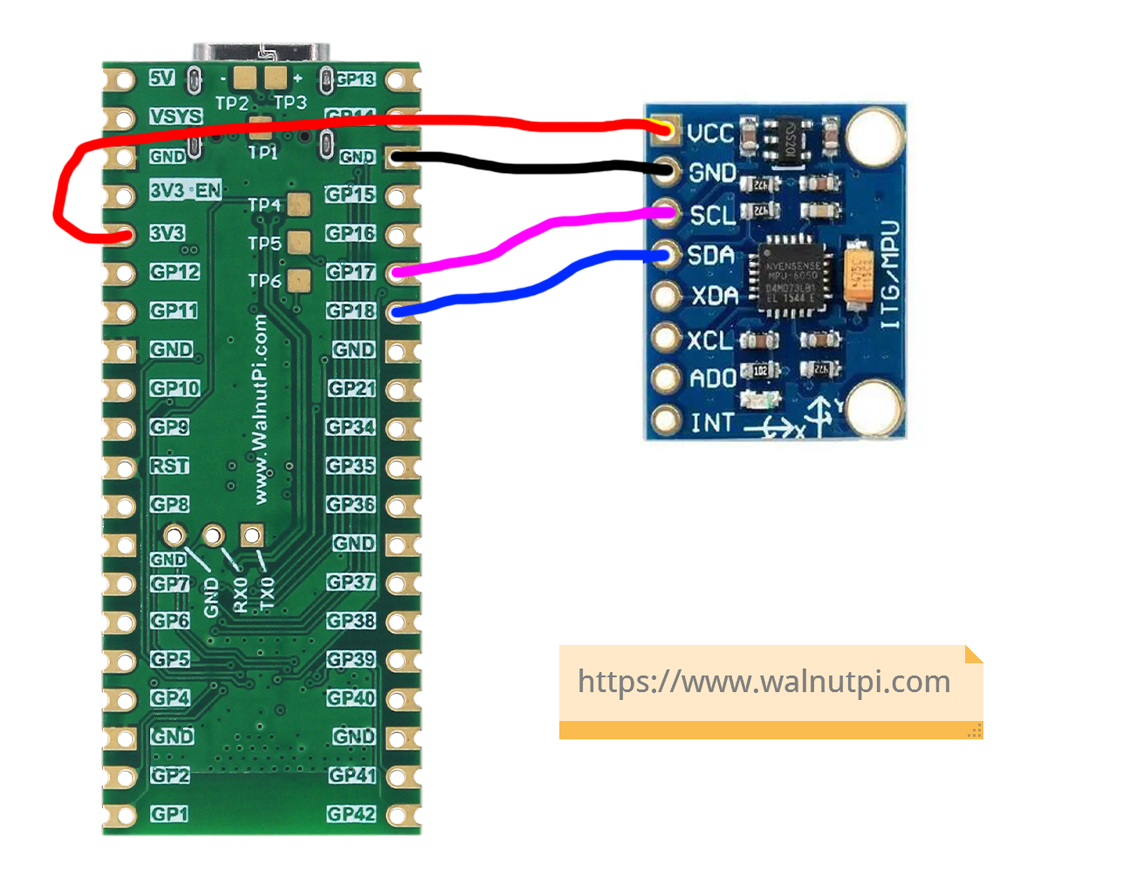
The WalnutPi PicoW's MicroPython firmware integrates software-simulated SoftI2C, supporting any GPIO pin to be defined as the relevant pin — very convenient. This example uses the WalnutPi PicoW's GPIO17 connected to the MPU6050 sensor's SCL pin, and GPIO18 to the SDA pin, as shown below:
This example uses WalnutPi's I2C1 to connect to the MPU6050 sensor:
MPU6050 Object
Constructor
mpu = mpu6050.accel(i2c, addr=0x68)
Build an MPU6050 object.
Parameter description:
i2c: Defined I2C object.addr: Module I2C address. Default: 0x68;
Usage
mpu.get_values()
Returns 7 data values in sequence:
x, y, z acceleration values, unit m/s², data type float
Temp temperature value, unit ℃, data type float
x, y, z angular velocity values, unit rad/s, data type float
After understanding the MPU6050 sensor principles and object usage methods, we can organize the programming approach. The flow chart is as follows:
Reference Code
'''
Experiment Name: 6-Axis Accelerometer (MPU6050)
Version: v1.0
Author: WalnutPi
Platform: WalnutPi PicoW
Description: Program measurement of MPU6050 acceleration, angular velocity, and temperature values, display in terminal.
'''

from machine import SoftI2C,Pin
import mpu6050,time

#Build I2C object
i2c1 = SoftI2C(scl=Pin(17), sda=Pin(18))

#Build MPU6050 object
mpu = mpu6050.accel(i2c1)

while True:

    #Print 6-axis accelerometer raw values
    print(mpu.get_values())

    #Delay 1 second
    time.sleep(1)
Experimental Results
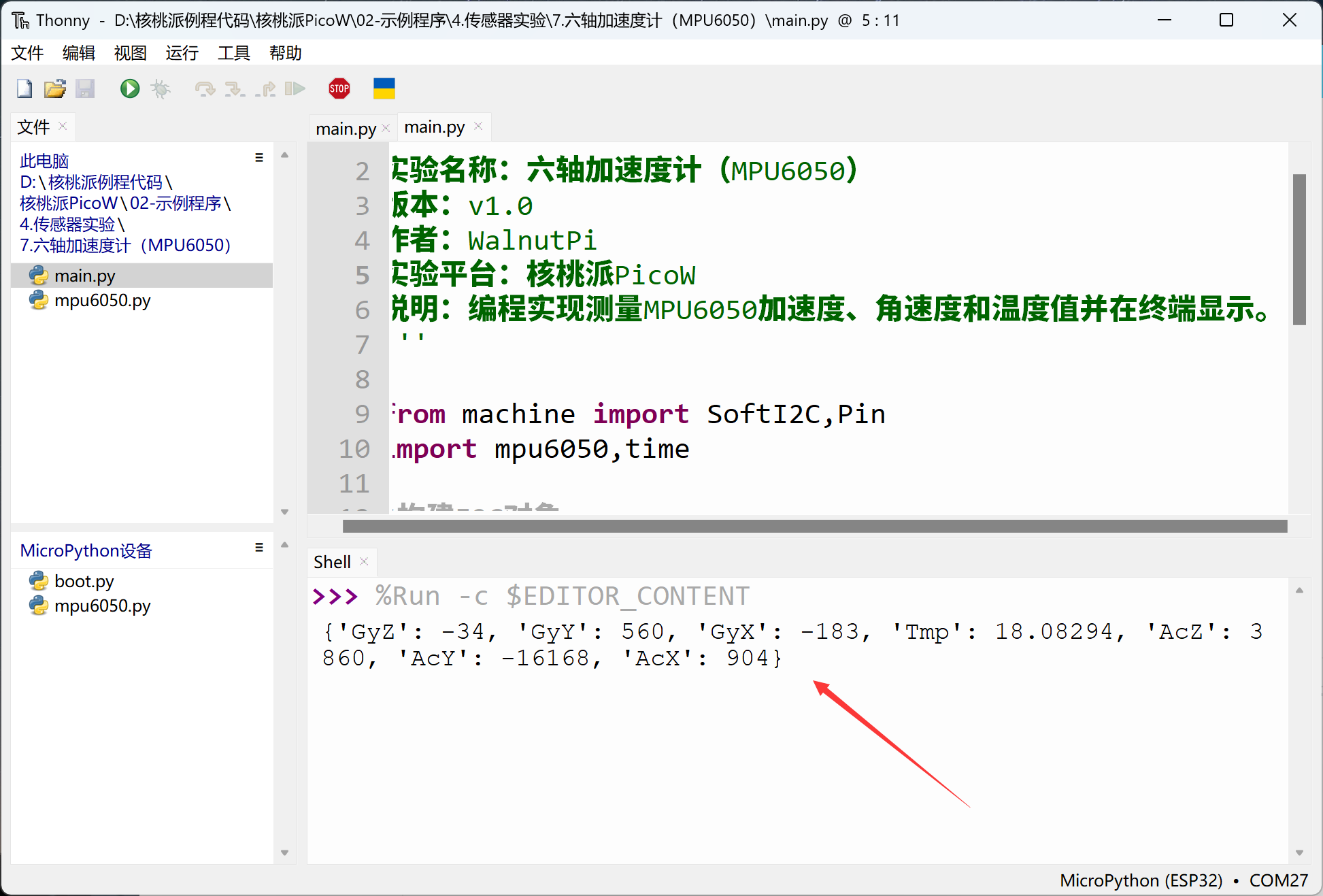
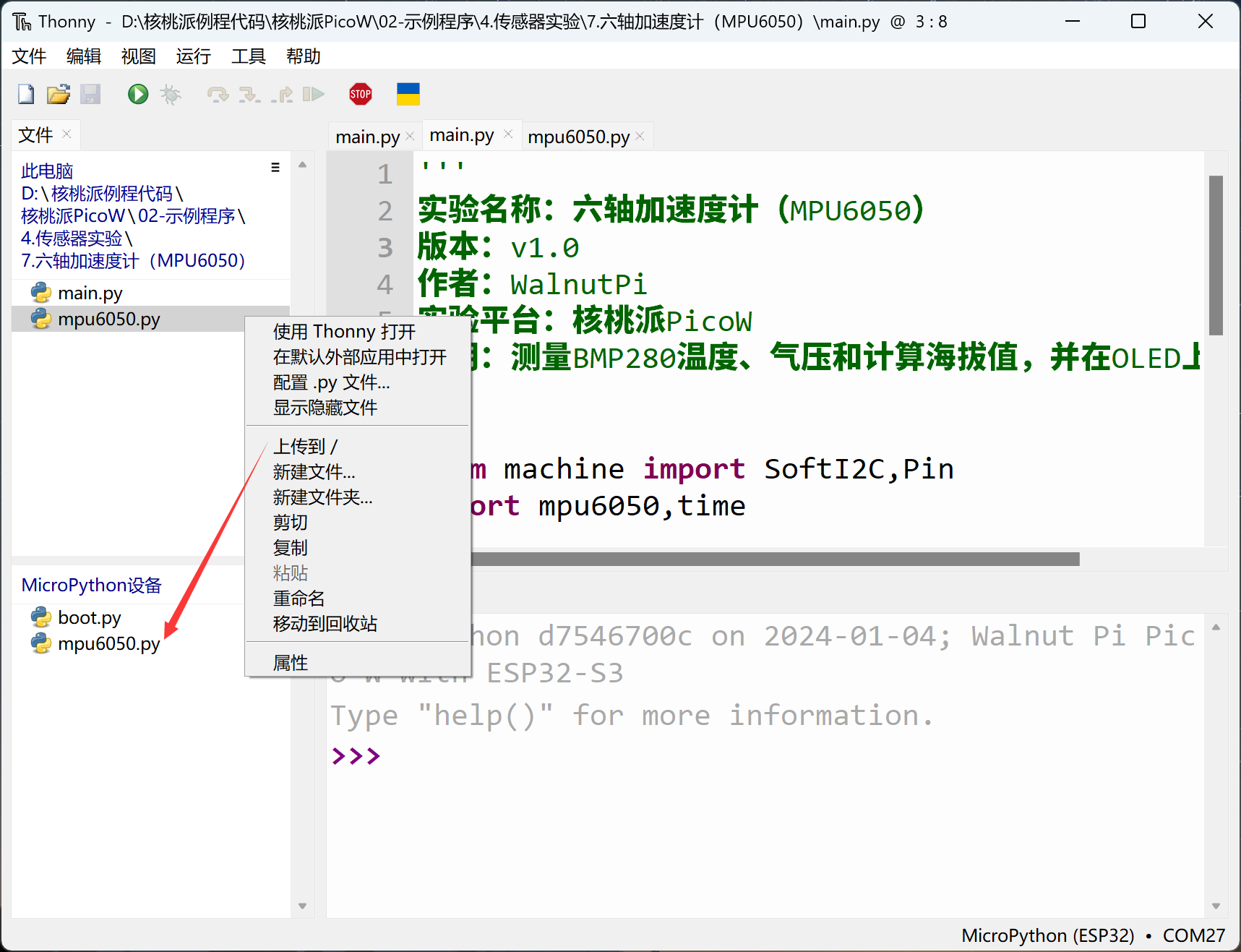
Since this example code depends on other Python libraries, you need to upload the mpu6050.py file to the WalnutPi PicoW:
Run the main program code using Thonny IDE. You can see the terminal printing the 7 raw values from the MPU6050 6-axis accelerometer: